The NATURELOOP brand incorporates the Trocellen Group’s products that demonstrate and reflect our commitment to environmental responsibility and the continuous innovation to provide sustainable solutions. The Trocellen Group’s goal is that by 2025 all new products will be ecodesigned. In order to achieve our carbon neutrality goal, the continuous improvement of our product portfolio is at the core of our corporate environmental footprint reduction activities.

New products and solutions at Trocellen are developed using Ecodesign principles and processes.
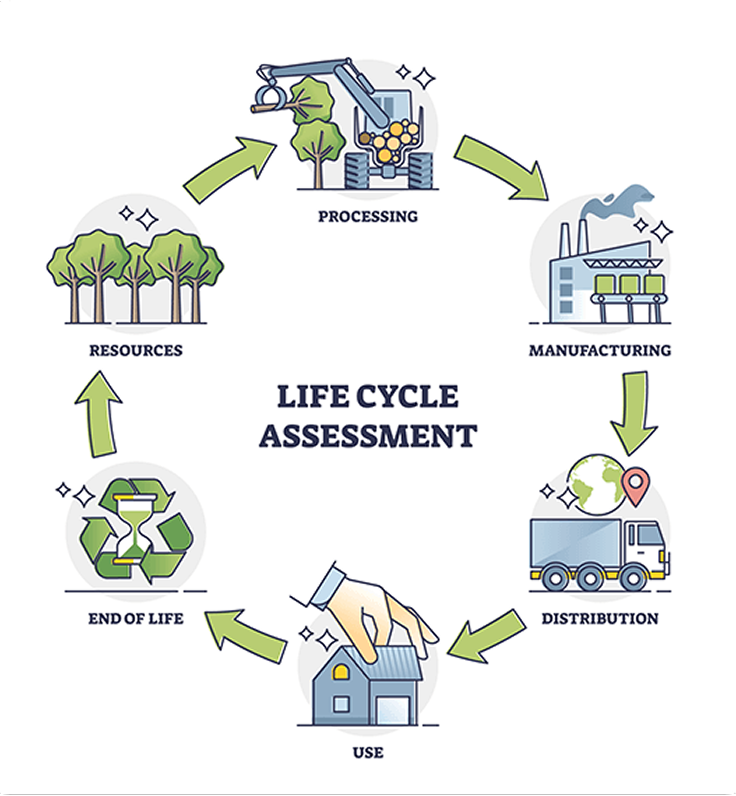
The traditional focus on energy efficiency and waste reduction during the manufacturing process is no longer considered being sufficient to provide sustainable products, as relevant elements of the product life cycle are left out of scope. Trocellen chose to implement Ecodesign thinking into the product development process to combine best performance with the lowest possible environmental footprint generated through the entire product life cycle. Ecodesign is considered as an integrated aspect in the product development process.
The NATURELOOP brand incorporates the Trocellen Group’s products that demonstrate and reflect our commitment to environmental responsibility and the continuous innovation to provide sustainable solutions. The Trocellen Group’s goal is that by 2025 all new products will be ecodesigned. In order to achieve our carbon neutrality goal, the continuous improvement of our product portfolio is at the core of our corporate environmental footprint reduction activities.
As Circularity is one of the key factors to reduce the environmental footprint of a product it is also a clear target for Trocellen not only to challenge its suppliers for improving their production processes but also to look into life cycle stages like transport, use phase, recycling and end-of-life for possibilities to reduce the environmental impact.

When Recyled Polyethylene contributes to reduce the environmental footprint.
The Trocellen REcy-PE solution is a great addition to the company’s sustainable product portfolio. It contributes significantly to Trocellen’s sustainability efforts and the partners’ commitment towards environmental balance and responsible operations.
Trocellen REcy-PE solutions are made with recycled polyethylene, which contributes to reducing the overall environmental footprint of the product, therefore supporting the fight against climate change and limiting the effects of global warming.
The production of 1 kg LDPE based on chemical recycling results in 55% less emissions than producing it based on fossil feedstock. Each kg of fossil LDPE being substituted by chemically recycled LPDE used for Trocellen REcy-PE foams’s production reduces the emissions by 0,86 kg CO2-eq.
The lowered environmental footprint of the Trocellen REcy-PE solutions comes from the limited CO2 emissions during the production of recycled polyethylene compared to fossil-based virgin polyethylene. Further benefits that make these customized solutions a more sustainable choice:

Trocellen REcy-PE is a great, sustainable solution for a large variety of applications.
The evaluation process is already completed for N-foam types in the density range between 30 to 200 Kg/m3. These products are tested for a recycled raw material content up to:
Trocellen REcy-PE solutions also support compliance with increasingly stringent regulatory requirements (new EU legislations for mandatory recycled content, industry specific standards and certifications, such as LEED certification in the construction and development industry and WELL Building Standard).
Upon request Trocellen REcy-PE solutions are provided with
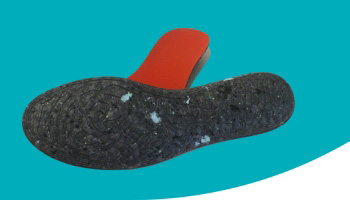
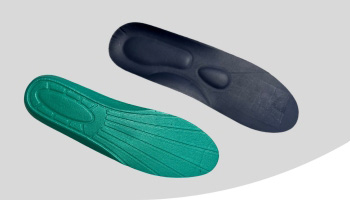
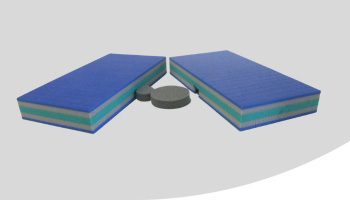
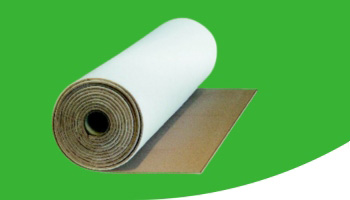
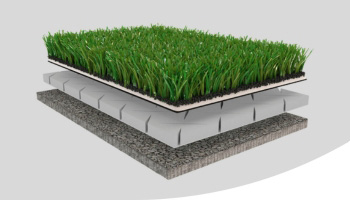
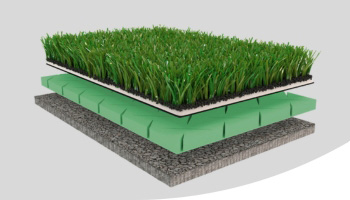
Trocellen REcy-PE can be used for our key industries: Automotive, Footwear, Insulation, Packaging and Sport (also covering artificial turf shock pad and tatami products).
For detailed product list and specific offer please contact us

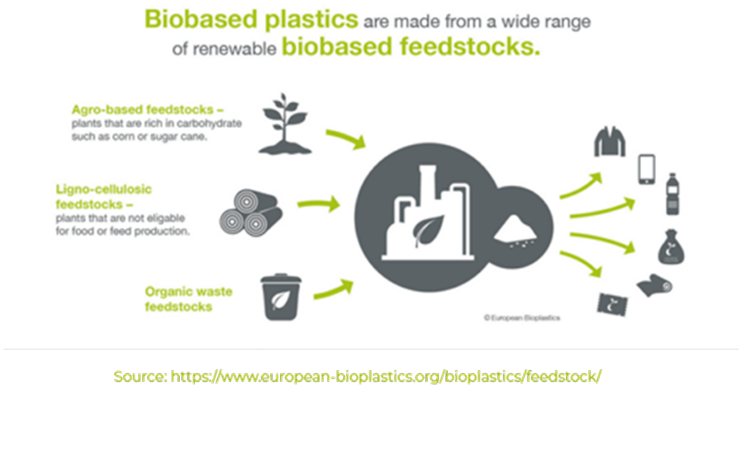
TR-EEcell is Trocellen’s biobased foam. Products contain raw materials derived from biomass, still look, behave and feel like the fossil based plastic products.
Biobased raw material could come with negative environmental impacts like deforestation, land use and negative impacts on soil and water, therefore it is important to use only feedstock from certified sources, proving the lowest possible environmental impact.

There are different feedstock options to produce biobased plastics. Trocellen Group does not promote the use of first generation feedstock as it is in direct competition with food production, instead preferring suppliers who are focusing on using second-generation feedstock, made of non-food biomass, whilst monitoring all upcoming alternative feedstock opportunities (other second and third generation feedstock).
Feedstock sourcing in the supply chain: sustainable, transparent, responsible and trusted
Trocellen Group’s responsibility is to ensure a supply chain where no possible negative impact can override the benefits of the usage of the biobased raw material product. Trocellen Group has set up its’ supplier engagement process to enable trusted communication with the key suppliers, to ensure, that our partners are working with the same motivation towards the creation of more sustainable products.
To ensure the transparency of the processes our plants where we produce TR-EECell products have International Sustainability and Carbon (ISCC) certifications.
We also we adopted the (3rd party) DIN CERTCO certification, in order to get stated what is the actual amount of that content of the specific TR-EEcell type, in the range of 20-50%, 50-85% or >85%.

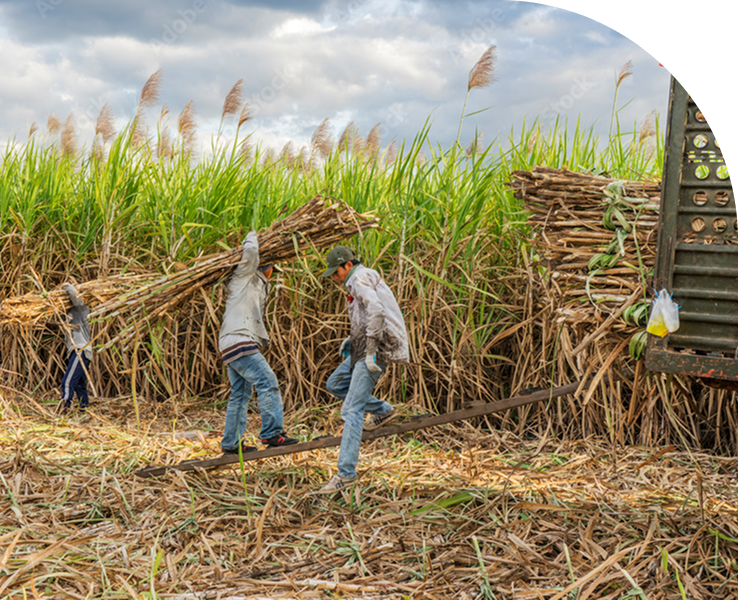
The process of exploiting the sugar cane usually involves five squeezing steps: the juice from the first two steps is destined for the production of brown sugar for human consumption, while the remaining three steps generate a less valuable juice and not suitable for the production of food sugar.
The ethanol necessary for our foam comes from fermented sugar cane juices extracted during the last three squeezing steps, therefore unsuitable for human consumption.
From the polymerization of this ethanol the polymers necessary for the production of bio-based PE foam are obtained.
Furthermore, even the remaining parts of the sugar cane are not wasted: the final residues of the juices (bagasse) are incinerated, thus producing energy used in the production process of sugar and ethanol and thus giving a further and significant contribution to sustainability.

On the way to a sustainable production and a circular economy in the TROCELLEN Group, the use of recycled and bio-based materials has become a very high priority. Beside using these materials in our product portfolio, the proof of sustainable origin has to be ensured.
Beside physical segregation, mass balance is a widely used approach in the chemical industry and commonly used for polymers. It makes it possible to track the amount of sustainable content in the value chain and declare it on a mathematically basis to a final product. An additional benefit of this approach can be the unchanged quality of the foam.
The ISSC PLUS certification follows some predefined and transparent rules and every company is audited regularly by an independent certification body.
Our certified plants and certificates are listed here.
We can offer chemical and physical crosslinked foam solutions under the ISCC PLUS certification, please get in contact with our sales or technical team to discuss your needs and ideas.