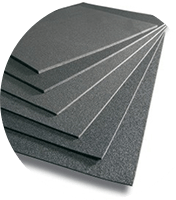
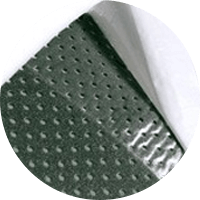
Despite being active in very diverse industries our solutions are all based on the same principles: light weight, environment friendliness, high quality, stable performance and simplicity.
In addition to polystyrene and polyurethane foams, closed cell polyethylene foam is one of the most commonly used foams in industry. It can be used in a number of ways:
Closed cell cross-linked polyethylene foam is manufactured horizontally and in continuous technology. Resistant surface In many thicknesses and densities
Cross-linked by physical irradiation. Manufactured using horizontal or vertical technology. Fine cellular structure and smooth surface. High heat resistant PP foam in many thicknesses and densities
Various lamination processes. Self-adhesive coating. Die-cutting. Thermoforming. Perforating and embossing
PE stands for polyethylene, which is one of the most popular plastic materials. It is available in large quantities, at reasonable cost and has a broad application spectrum. When speaking about PE it covers a large spectrum of different grades which have in common their lightweight and thermoplastic behavior. Differences in the structure make them being adjustable for many applications. Polyethylene foam is environmentally and skin-friendly, and harmless to the human body.
This foam type, based on polyethylene, is foamed by using an extrusion process, The polyethylene is melted and a gas, typically nitrogen or carbon dioxide is injected. When the melt leaves the machine the injected gas expands and a foam structure is foamed. Extruded polyethylene foams are mainly used as packaging material. This foam type has a closed cell structure which provides good mechanical protection, modifying the flat foam structure into a three-dimensional shape by thermoforming is not possible.
Use: as packaging material
Cross-linked PE foam is flexible and absorbs vibrations thanks to the structure of the foaming material. Its thickness (0,3 – 500 mm) and density (approx. 0.025 – 0.350 g/cm3) are variable, and it is a lightweight material (up to 30 times lighter than water).
Cross-linked foam forms a resistant surface. Cross-linked closed cell polyethylene foam means that during cross-linking, the molecules connect by chemical bonds, forming a three-dimensional structure. This increase the material stability at elevated temperature and is the basis for the following foaming step creating a fine cell and high expanded material. Crosslinking can be initiated in different ways, most common or the use of chemical crosslinking agents or the use of accelerated electrons.
It is also available in fire retardant and conductive variants: the cross-linked polyethylene foam is much more widely used than extruded PE foam. This is also due to the fact that it withstands the rigours of weather, and the cross-linked foam does not react with most chemicals, and is not vapour-permeable. Thus, it can be used to produce a durable insulating material, as it is not consumed by insects or rodents. Its vibration damping effect is particularly high.
Although the ‘PE foam’ is a commonly used name for this material it should be mentioned that not only polyethylene is used but also other materials of the polyolefine group like EVA or polypropylene.
Use:
TR-EECell is a bio-based cross-linked polyethylene foam, which is made almost entirely from raw material obtained from biomass (sugar cane). The advantages of the technology are that the obtained polyethylene closed cell foam sheets
At our manufacturing plants located in Germany, Italy, Hungary, Spain and Malaysia, we produce cross-linked polyolefin foam sheets. As polyolefin foam suppliers, our products are used in various industries such as automotive, production of construction and insulation materials, leisure and professional sports equipment, self-adhesive foams, and in the footwear and packaging industry.
Even though we are active in such diverse areas, our solutions are all based on the same principles: lightweight products, environmentally friendly processes, high quality, consistent performance and simplicity.
The price of PE chemical foam is dependent on the following factors: